
Olive skin mini guide
Why makeup pulls orange on you (and how to tell if you have olive skin).
If your foundation never quite matches, your blush turns peachy no matter what, or your makeup looks completely different depending on the lighting—you might have olive skin.
Olive skin is often misunderstood, and most brands still don’t formulate with it in mind. This guide will help you understand what’s actually going on—and how to work with it.
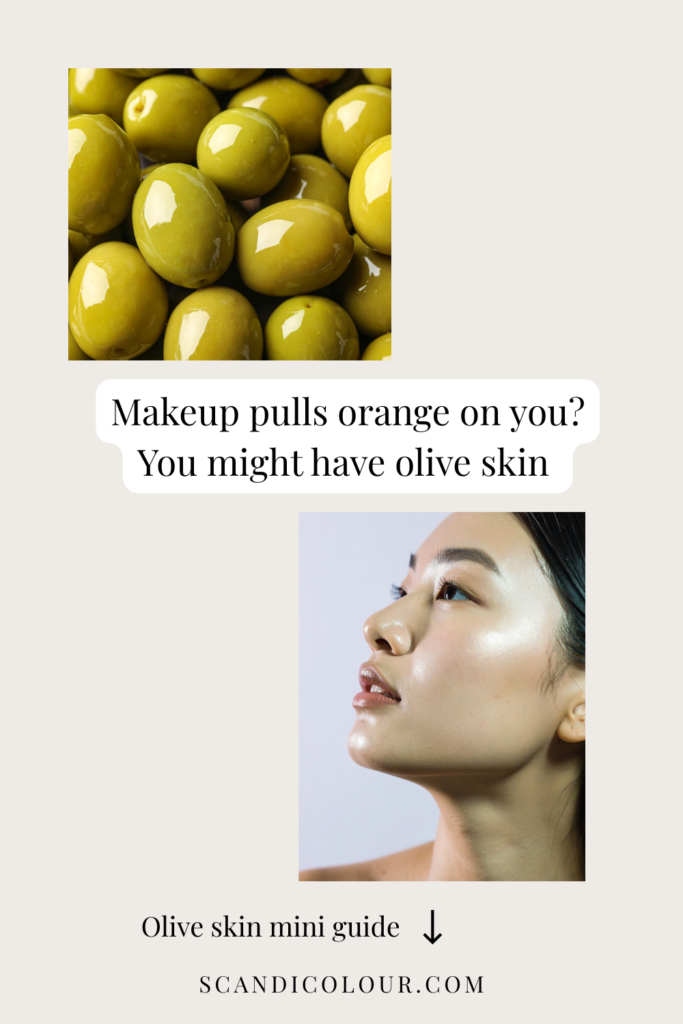
What olive skin actually is
Olive skin is not an undertone.
It’s a subtle green/grey cast that sits on top of your natural undertone—which means you can be:
• cool olive
• neutral olive
• warm olive
This is why olive skin is often described as “chameleon-like”—your tone shifts depending on lighting, products, and surrounding colors.
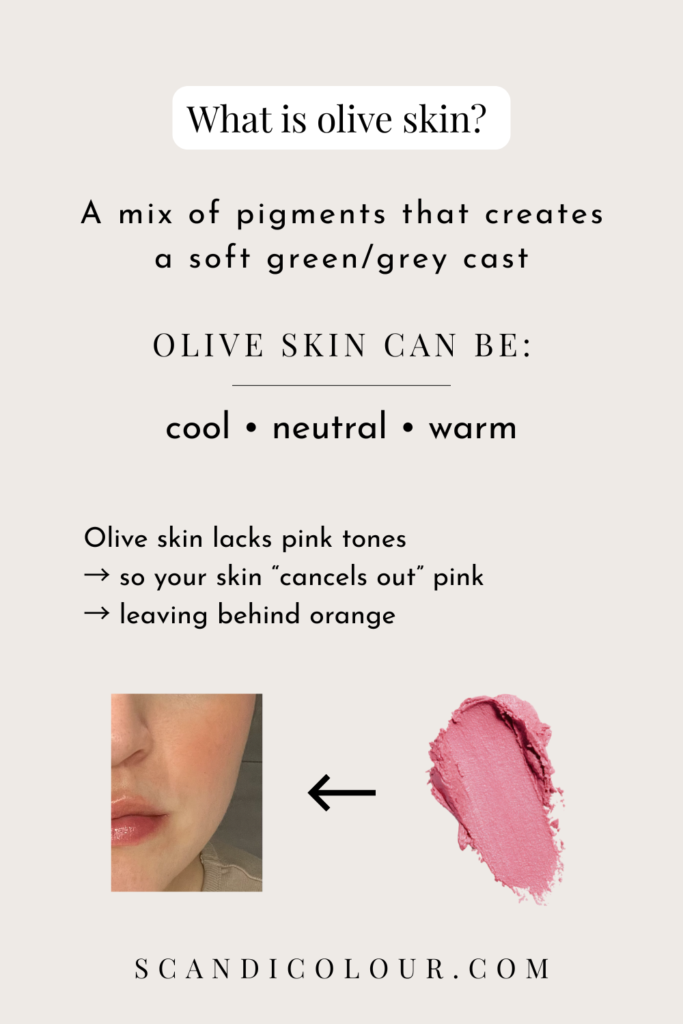
Why makeup pulls orange on olive skin
Olive skin typically has less visible pink in the skin.
When you apply pink-toned products:
• your skin neutralises the pink
• which can leave behind warmth
→ making things look peachy or orange instead of pink
This is also why:
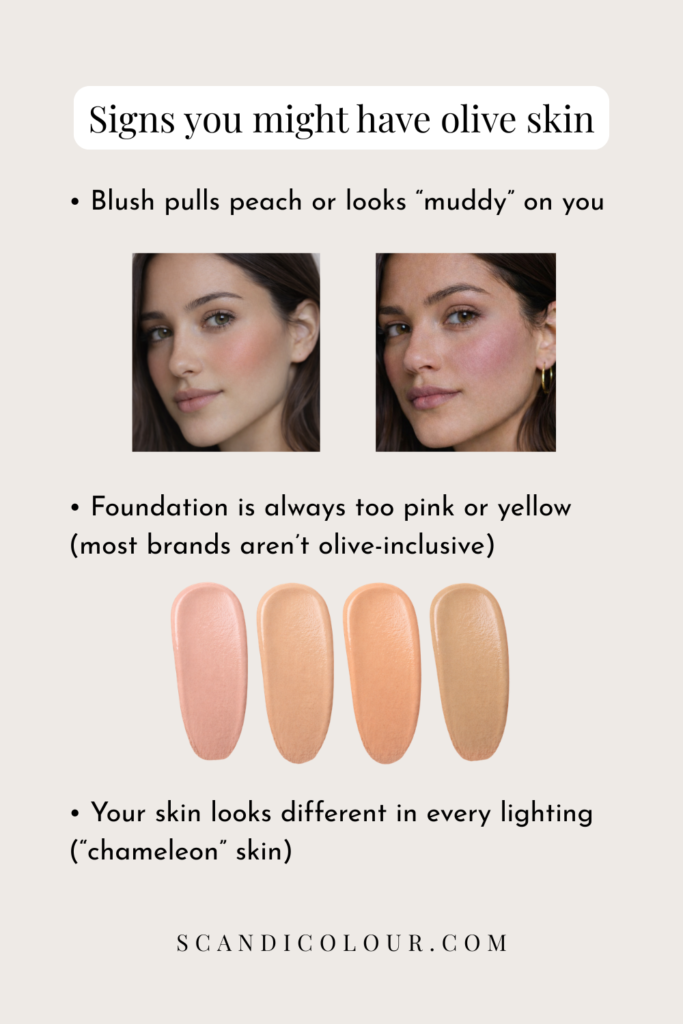
• foundations look too yellow or too pink
• blush looks “muddy” instead of fresh
Quick ways to tell if you might have olive skin
- Check your neck in natural daylight
Does it look slightly green, grey or muted compared to your face? - Foundation test (this is the best one)
Go to a store and swatch:
• cool
• neutral
• warm
• olive (if available)
If everything looks off except olive (or none match at all), that’s a strong indicator.
Tip: Haus Labs have great shade options including olive tones.
- You’re a “chameleon”
You look different in:
• bathroom lighting vs daylight
• gold vs silver jewelry
• different seasons
Why it’s so hard to find a match
Most brands formulate shades along:
• pink (cool)
• yellow (warm)
• neutral
But olive doesn’t fit neatly into that system.
So even “neutral” shades can:
• pull orange
• look too saturated
• or sit on top of the skin instead of blending in
How to start choosing better shades
Instead of just looking at undertone, focus on:
• muted vs saturated colors
• slightly greyed-out tones
• less obvious pink/yellow bases
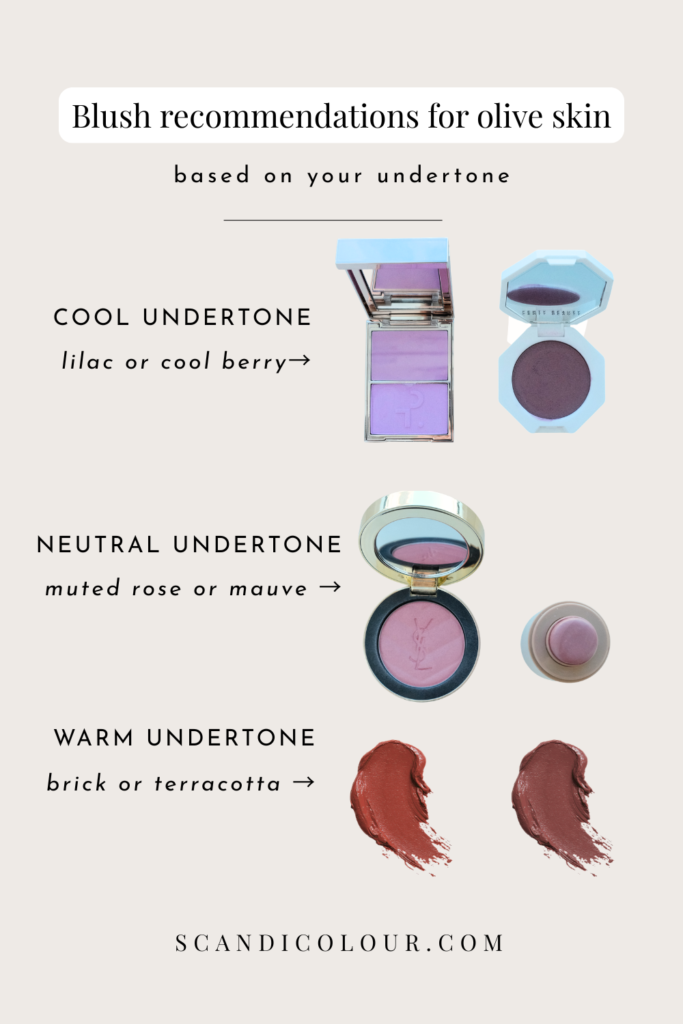
For blush:
• cool olive → lilac, berry
• neutral olive → muted rose, mauve
• warm olive → terracotta, brick
Finding the right blush for olive skin can be tricky, since both undertone and mutedness affect how colors show up. Even small shifts in undertone can make a shade pull too bright, too warm, or slightly off.
Here are a few blush recommendations based on undertone:
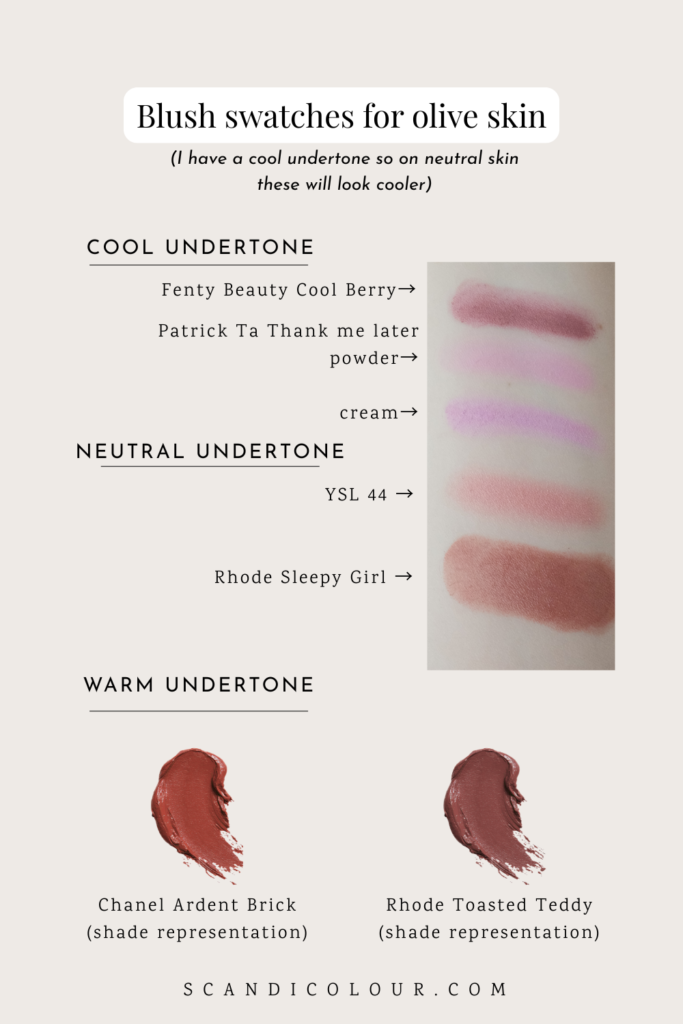
Cool undertone:
Neutral undertone:
Warm undertone:
If you have a cool undertone (like me), more neutral shades may still pull slightly warm—so cooler tones often create the most balanced, natural flush. Don’t be afraid to use lilac blush – it looks intimidating but on olive skin it will appear more pink and natural.
Final tip
If your makeup has never looked quite right—but you can’t explain why—it’s probably not the product.
It’s that the industry hasn’t been built with olive skin in mind.
Unsure of your undertone?
I have a similar guide including quick tests to find out if you’re cool, neutral or warm.